




When we think about dogs, the image of a loyal and loving companion usually comes to mind. However, aggressive dog behavior such as growling, barking, or even biting can sometimes occur. This doesn't necessarily mean you have a dangerous pet or that you're an ineffective caretaker. Recent studies show that about 40% of dogs have displayed signs of dog aggression, such as growling or snapping at their owner, at some point in their lives.
Dogs rarely become aggressive without reason. There are various levels of dog aggression, and some are perfectly natural in specific circumstances. Pets often believe they have a reason for acting out. If your dog suddenly becomes aggressive or you notice a significant change in behavior, you should consult your veterinarian immediately, as medical conditions can sometimes cause aggressive tendencies. Persistent dog aggression may need the expertise of a professional trainer or canine behavior specialist.
First Things First: What Aggression Actually Looks Like
Before you can address the behavior, you have to catch it early. Aggression is rarely a switch that flips; it's a slow build, and dogs almost always warn you before they escalate. Watch for these early signals:
-
Freezing or going stiff: A still dog is often a dog about to react
-
Whale eye: The whites of the eyes showing as your dog side-glances
-
Lip curling, showing teeth, or a low growl: A warning, not a threat to be punished
-
Tucked tail or ears pinned flat: Fear that can quickly turn defensive
-
Hackles raised along the shoulders or spine
A critical note on growling: never punish a growl. A growl is your dog's way of saying "I'm uncomfortable" before they resort to teeth. Punish the growl, and you get a dog who bites without warning. That's a far more dangerous animal.
Common Types of Dog Aggression and How to Address Them
To help you recognize different forms of aggressive dog behavior, here are five main types of dog aggression along with tips to manage each one.
Territorial Aggression
Territorial aggression is often seen in protective or herding breeds. Dogs may bark or growl when someone approaches their home or yard. This instinctive reaction is reinforced when the dog successfully scares away strangers or animals.
A helpful approach to address territorial aggression is to introduce your dog to unfamiliar people in a controlled way. Have someone your dog does not know walk up to the door or through the yard. When your dog starts barking or lunging, the person should toss the dog a favorite treat. As the dog calms down and enjoys the treat, praise them and have the person leave. This teaches your pet to associate strangers with positive experiences instead of aggression.
Play Aggression
Not all aggressive-looking behavior is a cause for concern. Play aggression is common among puppies and young dogs and often looks scarier than it actually is. Dogs use body language and cues to let each other know when they're playing.
If your puppy bites too hard during play, a good method is to let out a sharp yelp to signal that the bite hurt. Give them a short break or "time out" from play when this happens to reinforce that gentle play is acceptable but roughness is not tolerated.
Fear Aggression
Fear-based aggression occurs when a dog feels threatened or trapped. A cornered or caged dog can become reactive, growling or biting in self-defense. Many dogs are startled by hands coming toward their heads, which can be interpreted as a threat.
To minimize fear aggression, avoid petting your dog's head directly; instead, gently stroke their back or side. Staring can also make dogs anxious. The best strategy is to create a secure environment and develop a trusting bond to reduce fear and anxiety.
Dominance Aggression
Dominance aggression typically involves dogs guarding items such as furniture, toys, or food bowls. This is common in young, unneutered male dogs. The behavior is reinforced when humans back off after the dog growls or snaps.
The most effective remedy is to have your dog neutered, which often reduces dominating tendencies. Alternatively, remove valued items until the dog has earned them through positive behavior or obedience, showing your pet that rewards come from desirable actions and not from being aggressive.
Predatory Aggression
Predatory aggression is an instinctive behavior rooted in a dog's hunting drive. This can involve chasing, stalking, or biting, and is often triggered by fast movements or noises from children or small animals.
This form of aggression usually diminishes with age. However, always supervise your dog and be aware of what triggers this behavior. Learn to redirect your dog's focus with engaging words or actions, such as "treat," "go for a ride," or "ball." To further enhance dog safety in case your dog bolts, consider using personalized pet tags that clearly state behavioral or medical issues.
Don't Overlook Aggression in Small Dogs
Here's an uncomfortable truth: aggression in small dogs gets laughed off far more often than it should. A 70-pound Shepherd lunging at a stranger gets a trainer called that afternoon. A 7-pound Chihuahua doing the exact same thing gets called "feisty" and scooped up mid-snarl.
That scooping is the problem. Small dogs get picked up instead of trained, carried past triggers instead of desensitized, and rewarded with cuddles the moment they react. From the dog's perspective, growling works perfectly; it makes the scary thing go away and earns a lift into safe arms. Research has consistently found that smaller breeds score higher on owner-directed and stranger-directed aggression than many large breeds. They just do less damage when they connect, so nobody intervenes.
Small dogs deserve the same dog aggression training as any other size: real counter-conditioning, real threshold work, real consistency. Treat the behavior, not the body weight.
So How Do I Get My Dog to Stop Being Aggressive?
Aggressive dog training isn't a weekend project; it's a slow rewiring of your dog's emotional response to a trigger. The approach that actually works looks like this:
-
Identify the specific trigger. "My dog is aggressive" isn't actionable. "My dog lunges at men in hats within 15 feet" is.
-
Find the threshold. Determine the distance where your dog notices the trigger but doesn't react. That's your starting line.
-
Counter-condition. At that distance, the trigger appears, and high-value treats rain down. Trigger disappears, treats stop. Repeat until your dog sees the trigger and looks at you expectantly.
-
Close the gap slowly. Move a few feet closer only when your dog is reliably calm. If they react, you moved too fast–back up.
-
Manage in the meantime. Avoid the trigger entirely outside of training sessions. Every reactive episode sets your progress back.
What doesn't work: prong corrections, alpha rolls, and yelling. Punishment-based methods suppress the warning signs without changing the underlying emotion, and multiple studies have linked them to increased aggression, not less. You're not building a calmer dog — you're building a quieter one who bites without notice.
Also worth saying plainly: some cases need a professional. If your dog has broken skin, if you're afraid of your own dog, or if you've plateaued for months, contact a certified behavior consultant (look for CBCC-KA or a veterinary behaviorist credential). That's not failure; that's the same instinct that makes you call a mechanic instead of rebuilding your own transmission.
A Safety Net for Reactive Dogs
Reactive dogs bolt. It's the nature of the thing; a startled dog, an open gate, and suddenly your carefully managed situation is a stranger reaching for a frightened animal on a sidewalk three blocks away.
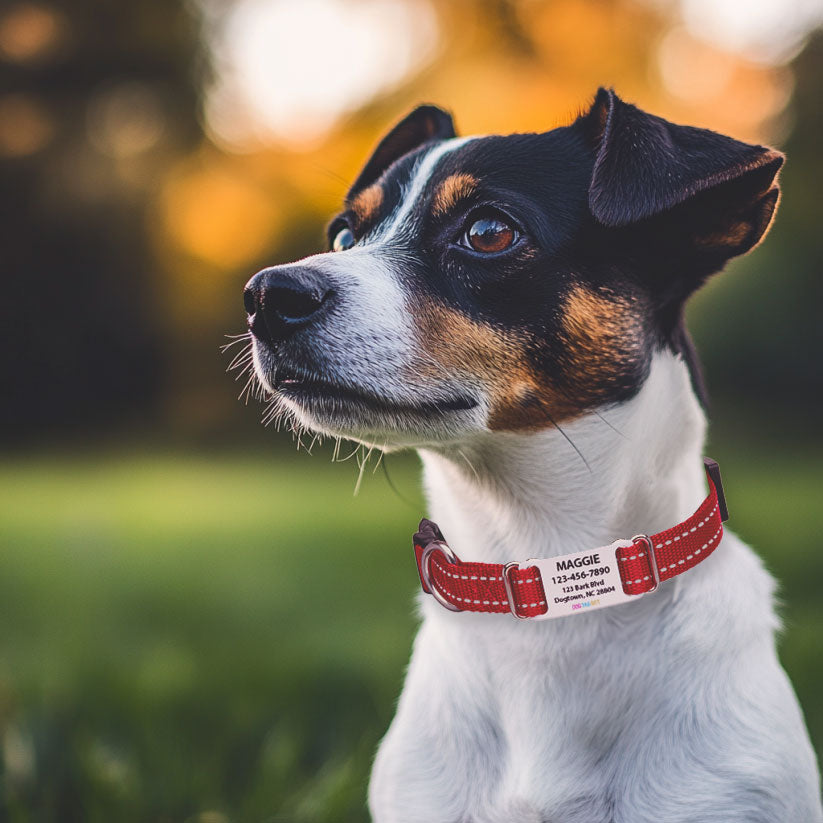
That's the moment a tag earns its keep — and for a reactive dog, what the tag says matters as much as the fact that it exists. A finder who reads Nervous — please call, don't reach before extending a hand is a finder who doesn't get bitten, and an owner who doesn't get a lawsuit. Two phone numbers instead of one buys you a backup when your cell goes to voicemail. And a tag that stays legible after a year of mud and chewing is the difference between a phone call and a shelter intake form.
Browse custom dog tags to find a design with as much personality as your dog has opinions.
Dealing with dog aggression is challenging and requires patience, consistency, and understanding. If you feel overwhelmed or are worried about injury risks, always consult a certified dog trainer or canine behavior expert for professional help. Proper training is essential for keeping both your pet and others safe.
Russ Barker has personally experienced dog aggression but continues to be a dedicated pet lover. As a manager and pet blogger at DogTagArt.com, Russ promotes pet safety through the use of high-quality pet ID tags. Their mission is to help lost pets return home through strong identification solutions. Explore their stylish and durable custom dog tags for a smart way to protect your best friend.
Learn more about custom pet ID tags and how they help ensure dog safety at Dog Tag Art.